



 Sign in with LinkedIn
Why Even Small Businesses Need CIO‑Level Strategy — Without the Full‑Time Price Tag
Why Even Small Businesses Need CIO‑Level Strategy — Without the Full‑Time Price Tag
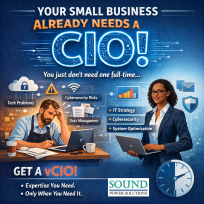 In today’s fast‑moving digital landscape, technology isn’t just a support function—it’s a strategic driver of growth, efficiency, and long‑term stability. Large enterprises have long understood this, relying on Chief Information Officers (CIOs) to align technology decisions with business goals.
But what about small and medium‑sized businesses?
Many SMB leaders assume that a CIO is a “luxury” reserved for Fortune 500 companies. In reality, the strategic value a CIO brings—improved planning, reduced costs, smarter technology investments—is even more essential for smaller organizations that operate with tighter budgets and leaner teams.
The good news? You don’t need a full‑time CIO to get full‑scale results.
The Problem: SMBs Need Strategy, Not Just Support
Most small businesses have someone who manages day‑to‑day IT operations—sometimes an internal tech, sometimes an MSP. But operational support and strategic leadership are not the same thing.
A CIO focuses on:
- Long‑term technology planning
- IT budgeting and cost optimization
- Cybersecurity strategy
- Workflow and automation improvements
- Vendor and contract management
- Aligning technology with business growth goals
These are critical areas that determine whether technology becomes an advantage… or a bottleneck.
And here’s where many SMBs feel the pain:
- Rising IT costs with no clear roadmap
- Reactive decision‑making instead of proactive planning
- Security risks from outdated systems
- Lack of insight into which technologies actually drive ROI
A full‑time CIO could solve these issues—if hiring one wasn’t a six‑figure commitment.
The Solution: vCIO (Virtual CIO) Services
A virtual CIO gives businesses access to seasoned CIO‑level expertise on a part‑time or as‑needed basis. You get the strategic leadership of a full‑time executive without the financial burden of adding one to your payroll.
With a vCIO, small and medium‑sized businesses can:
- Develop a clear IT roadmap that aligns with business goals
- Reduce unnecessary technology spending
- Improve security posture with expert guidance
- Implement scalable systems that grow with the business
- Gain executive‑level insights during planning and budgeting cycles
- Make informed decisions rather than guessing or reacting
This model works because most SMBs simply don’t need 40 hours per week of CIO time. They need high‑quality guidance in focused intervals—monthly, quarterly, or during key projects.
The Value: Strategic Thinking That Pays for Itself
The biggest benefit of using a vCIO?
Better decisions. Lower costs. Higher productivity.
A vCIO helps identify:
- Where you’re overspending
- Where technology is causing inefficiencies
- Which tools actually move the needle
- How to modernize responsibly
- What risks need attention right now
For most businesses, the cost savings from proper vendor management, lifecycle planning, and strategic investment alone can offset the cost of vCIO services.
It’s not about spending more on IT— It’s about spending smarter.
The Bottom Line
Small and medium‑sized businesses deserve the same strategic advantages as large enterprises. A vCIO makes that possible—delivering experience, insight, and planning without the overhead of a full‑time executive.
If your business is growing, facing technology challenges, or simply wants to get ahead of the curve, a part‑time CIO might be one of the smartest investments you can make.